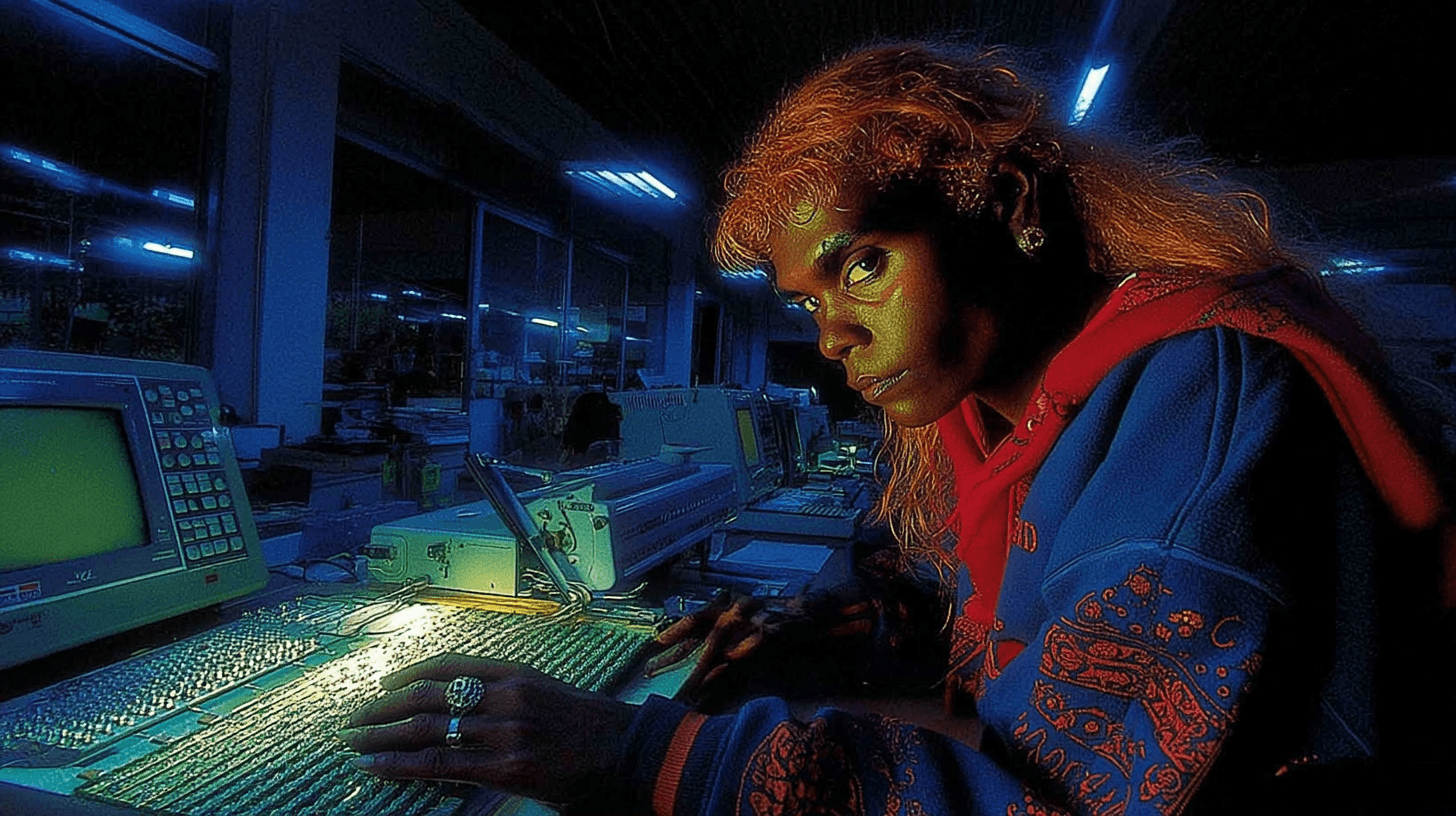
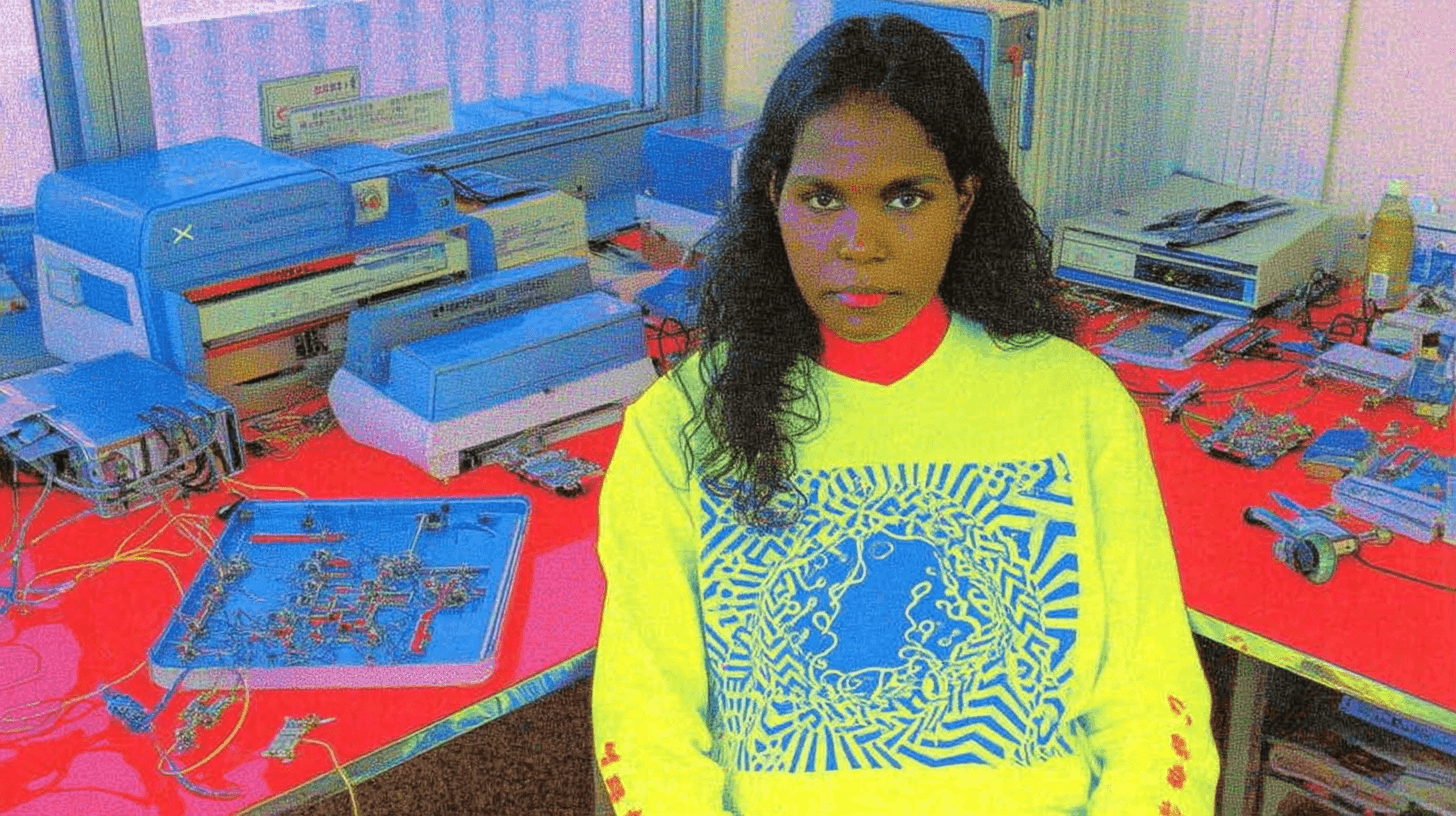
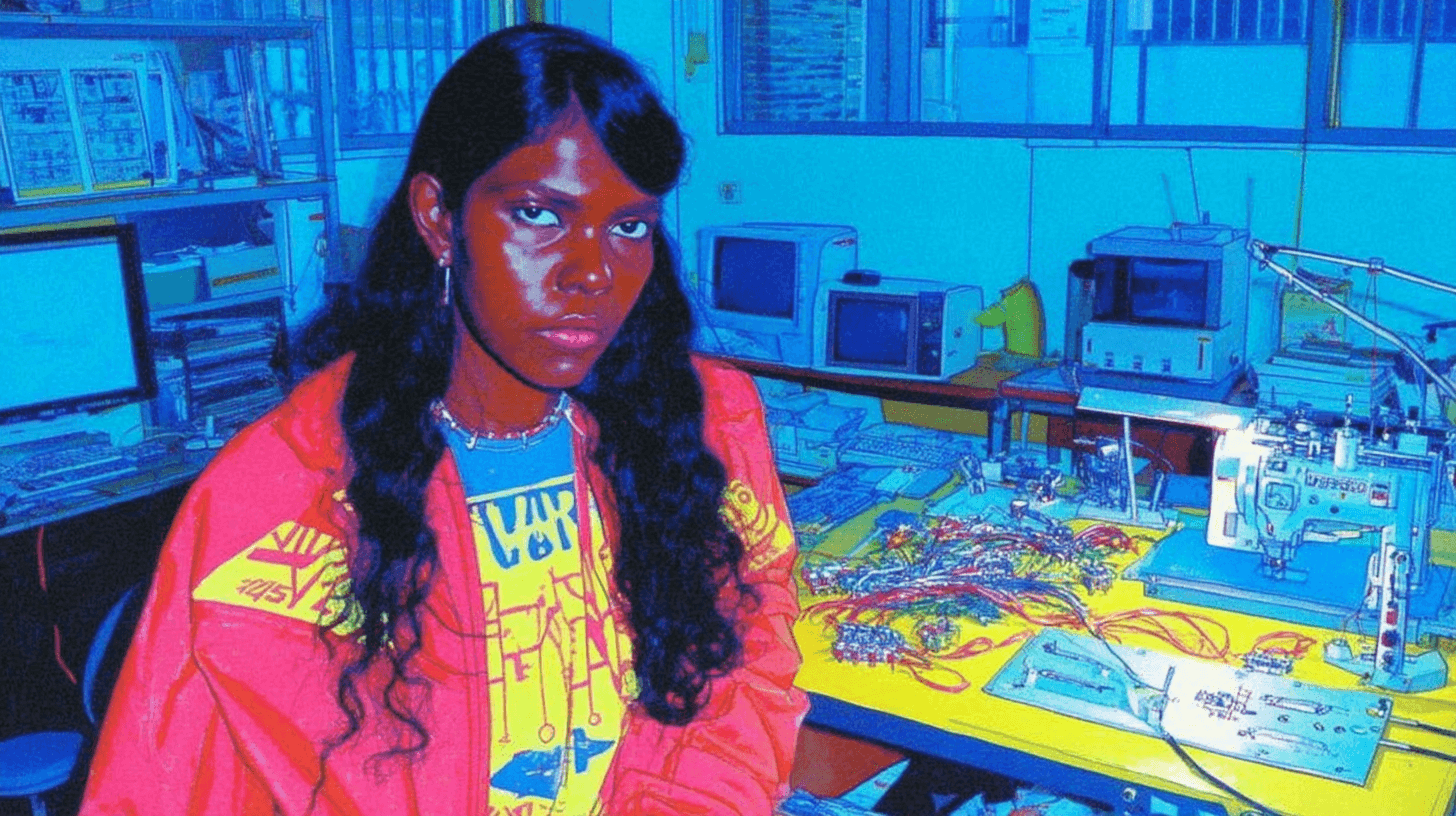
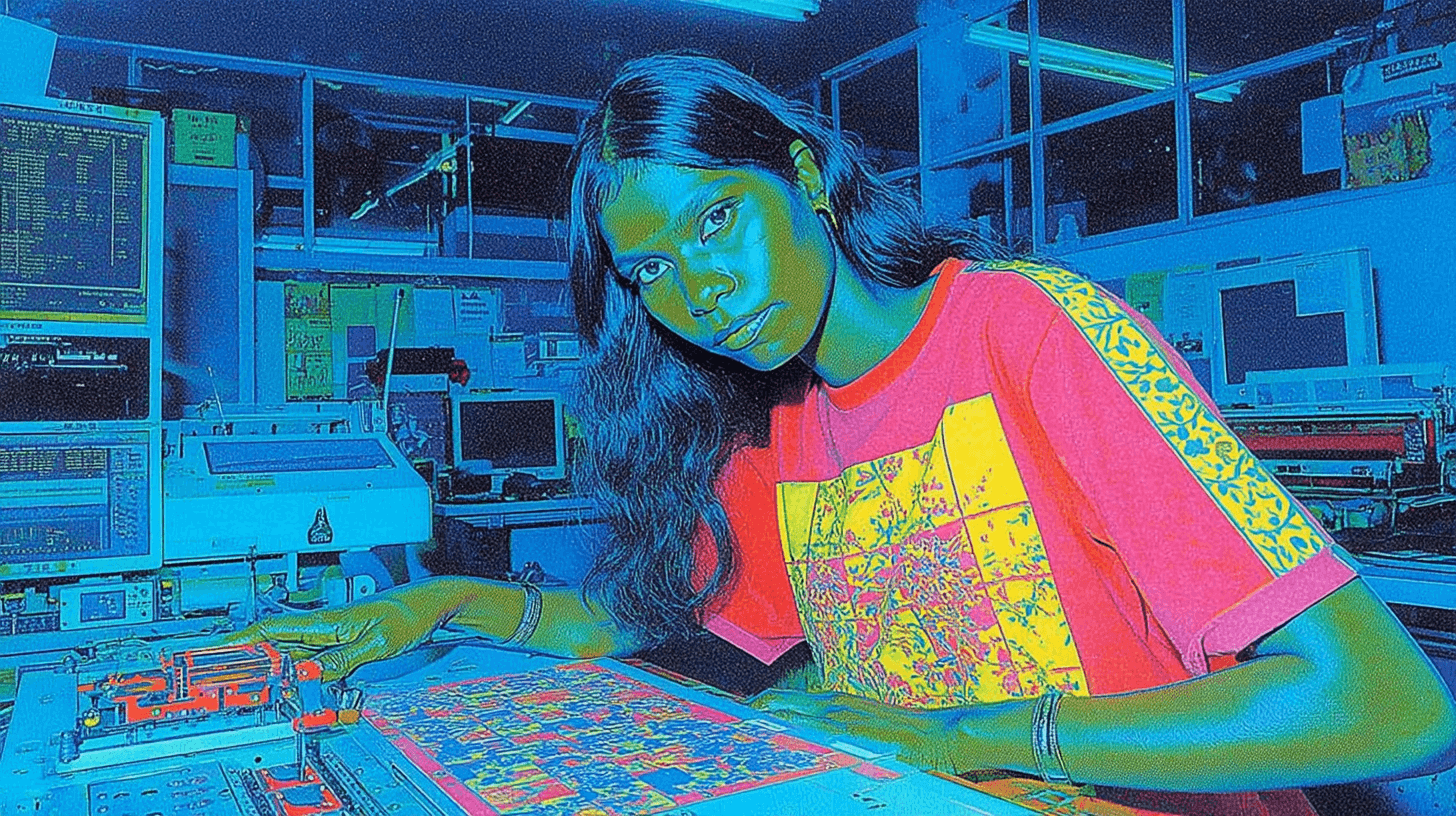
Her identity is not the container of her work. It is one of many keys she uses to place certain states in the system. When she signs a pattern, a garment reference, or a release, she is attaching a key to that moment. That key can accumulate recognition over time because people can follow its sequence of signed states. That sequence becomes legible. It forms what others perceive as her “voice” or “line.”
DIGITALAX.XYZ
: : * : : * : : * : :
GLOBAL DESIGNER NETWORK
CHROMADIN
CHROMADIN
CHROMADIN
COORDINATION TOOLS & THE INDIE DESIGNER
cc0 web3 fashion
This gives her a different way to build a brand. Instead of fixing everything under a single name, she can let multiple identities emerge from different keys. One key might sign highly finished garments. Another might sign experimental pattern states. Another might only appear in collaborations. Each key builds its own sequence of states. People can choose which sequence to follow.
Her “collection” is no longer a closed set released at one time. It is a thread through the graph. A series of states anchored over time. Some states gain attention and get materialized. Others remain as design substrate. The collection is visible because of the continuity of those anchors, not because it is packaged as a single release.
Her buyer base forms through interaction, not through a fixed profile. A buyer receives a garment with a reference. They use that reference to access further interactions—future pieces, private channels, repair or modification paths. These relationships are tied to proofs and tokens, not to a central account. She can engage with them directly when she wants, or step away without breaking the underlying structure.
Because the coordination layer does not rely on her identity, she can change how she appears at any time.
She can release work without attaching any key at all.
She can enter a co-op with a fresh identity and run new flows.
She can leave entirely, with her past work still present in the system.
Nothing needs to be migrated or transferred. The flows remain intact.
This also changes how continuity is perceived. Instead of a single linear brand history, there are multiple threads that can intersect, diverge, or disappear. A designer can explore different directions without having to reconcile them under one narrative. Each thread stands on its own because each is anchored independently.
The system supports growth without fixing the designer in place. Her recognition comes from the sequences she chooses to anchor and the interactions she chooses to maintain. At the same time, she retains the ability to step away, dissolve a presence, or start again from a new position without losing access to the tools, machines, and flows that make the work possible.
Her identity becomes something she composes, not something that contains her.